

Introduction to Live Sports Betting
Live sports betting has revolutionized the way people experience sports. Instead of placing a wager before a match begins and waiting for the final result, bettors can now engage with the action in real time. Every goal, touchdown, wicket, or point instantly changes the odds, creating continuous opportunities throughout the game. This dynamic environment makes live sports betting more interactive, strategic, and fast-paced compared to traditional pre-match wagering.
One of the biggest appeals of live sports betting is the ability to respond to what is actually happening on the field. If a team starts stronger than expected, if a key player gets injured, or if momentum shifts dramatically, bettors can adjust their decisions accordingly. This real-time flexibility adds depth and excitement, turning spectators into active participants.
However, with greater opportunity comes greater responsibility. The speed of live markets requires quick thinking, emotional control, and solid knowledge of the sport. Successful live betting is not just about luck — it involves analysis, timing, and disciplined bankroll management.
In this guide, we will explore how live sports betting works, the strategies that experienced bettors use, common mistakes to avoid, and how to approach in-play wagering responsibly while maximizing your understanding of this rapidly growing segment of the sports industry.
What Is Live Sports Betting?
Live sports betting, also known as in-play betting, is a form of wagering that allows bettors to place bets after a sporting event has already started. Unlike traditional betting, where odds are fixed at the time the wager is placed before kickoff, live betting features constantly changing odds that adjust based on real-time action.
As the game progresses, sportsbooks update the odds to reflect what is happening on the field. If a team scores, gains momentum, dominates possession, or loses a key player, the betting lines will immediately shift. These updates are driven by advanced algorithms that analyze live data, statistics, and market activity within seconds.
For example, in a football match, if the underdog scores an early goal, the odds for both teams will instantly adjust. In a basketball game, a 10-point scoring run can dramatically impact the point spread and total points market. In tennis, a single break of serve can change the favorite to the underdog in moments.
Live sports betting offers a wide range of market options beyond simply picking the winner. Bettors can wager on:
- Next team or player to score
- Total points or goals (over/under)
- Updated point spreads
- Quarter or half outcomes
- Player-specific performance markets
- Micro-bets like the result of the next play
Because odds move quickly, live betting requires fast decision-making and strong situational awareness. There is typically a short confirmation delay before a bet is accepted, which helps prevent unfair advantages caused by broadcast delays.
Overall, live sports betting creates a more interactive and strategic betting experience, where knowledge of the game, timing, and discipline play a major role in long-term success.
How Live Sports Betting Works
Live sports betting operates through a combination of real-time data collection, automated pricing models, and continuous market adjustments. The moment a game begins, sportsbooks activate live markets that respond instantly to every significant event.
Behind the scenes, sophisticated algorithms analyze multiple factors at once, including the current score, time remaining, team performance metrics, historical data, and betting patterns. These systems calculate updated probabilities and convert them into new odds within seconds.
For example, if a football team scores in the 10th minute, the sportsbook’s system immediately recalculates the likelihood of each possible outcome. The team that scored becomes more favored, while the opposing team’s odds increase. The same happens in basketball after a major scoring run, in tennis after a break of serve, or in cricket after a key wicket falls.
Real-Time Odds Movement
Odds in live sports betting are constantly shifting because they reflect dynamic probability. Several factors influence these changes:
- Scoreline changes
- Time remaining in the match
- Player injuries or substitutions
- Momentum and statistical dominance
- Market demand and betting volume
If a heavily favored team falls behind early, odds may shift dramatically, but experienced bettors often analyze whether the change is justified or an overreaction.
Bet Suspension and Confirmation Delay
During critical moments — such as a penalty kick, free throw, or VAR review — live markets may temporarily suspend. This protects sportsbooks from rapid information imbalances.
Additionally, when placing a live bet, there is usually a short delay (often a few seconds) before confirmation. This delay ensures fairness and prevents bettors from exploiting faster data streams compared to televised broadcasts.
Cash-Out Feature
Many live betting platforms offer a cash-out option. This allows bettors to settle a wager before the event ends, either securing a profit or minimizing a potential loss. The cash-out value adjusts continuously based on current odds and game conditions.
Technology and Data Integration
Modern live sports betting relies on:
- Official data partnerships
- High-speed data feeds
- Artificial intelligence models
- Risk management systems
- Automated trading platforms
These technologies ensure that markets remain accurate, competitive, and responsive to real-time developments.
Understanding how live sports betting works helps bettors make more informed decisions. Instead of reacting emotionally to odds movement, experienced players evaluate whether the updated price truly reflects the situation or presents potential value.
Popular Markets in Live Sports Betting

One of the biggest advantages of live sports betting is the variety of markets available during a game. Unlike traditional pre-match betting, where options are often limited to match winner, totals, and spreads, live betting opens up dozens — sometimes hundreds — of dynamic opportunities as the action unfolds.
Understanding these markets is essential for making informed decisions rather than placing impulsive wagers.
Match Winner (Updated Odds)
This is the most straightforward live betting market. As the game progresses, the odds for each team adjust based on current performance and scoreline.
For example:
- If the favorite concedes an early goal, their odds may lengthen.
- If an underdog dominates possession despite trailing, the odds may not shift as dramatically as expected.
Live match winner markets allow bettors to reassess teams based on actual performance rather than pre-game predictions.
Over/Under (Totals)
Totals betting remains extremely popular in live sports betting. Instead of predicting total points or goals before the game, bettors can wager based on the current pace of play.
For instance:
- A slow first quarter in basketball may lower the total line.
- A high-tempo football match with many chances may increase the live goal total.
This market rewards bettors who understand game rhythm and momentum.
Point Spread / Handicap
Live handicaps adjust continuously as the score changes.
If a basketball team goes on a scoring run, the live spread may shift several points within minutes. Skilled bettors often look for situations where they believe the spread overreacts to short-term momentum.
Next Team or Player to Score
This market focuses on predicting the immediate next scoring event. It is especially popular in football, basketball, and American football.
These bets require close observation of:
- Offensive pressure
- Defensive weaknesses
- Player substitutions
- Fatigue levels
Because outcomes happen quickly, odds are highly volatile.
Quarter, Half, or Period Betting
Instead of focusing on the full match, bettors can wager on smaller segments of the game.
Examples include:
- Winner of the next quarter in basketball
- Most goals in the second half
- Runs scored in the next over in cricket
Segment betting reduces long-term uncertainty and allows sharper focus on short-term performance trends.
Player Performance Markets
Live betting also includes individual player props, such as:
- Total points scored
- Shots on target
- Assists
- Rebounds
- Passing yards
If a star player starts aggressively or struggles early, live markets adjust quickly. Observant bettors may find value before odds fully stabilize.
Micro-Betting
Micro-betting is one of the fastest-growing segments of live sports betting. These wagers focus on very short-term outcomes, such as:
- Result of the next play
- Outcome of the next serve in tennis
- Will the next possession result in a score?
Micro-markets offer rapid results but require quick thinking and strong discipline.
Why Market Understanding Matters
Live sports betting provides constant opportunities, but not all markets offer equal value. Some have higher margins or react faster to data changes.
Successful bettors typically specialize in specific markets where they have deeper knowledge. Rather than betting on every available option, they focus on situations where their understanding of the sport provides an informational edge.
In live sports betting, knowledge of market structure can be just as important as knowledge of the game itself.
Effective Strategies for Live Sports Betting
Live sports betting rewards preparation, discipline, and sharp observation. While the fast pace can tempt bettors into impulsive decisions, long-term success usually comes from structured strategy rather than emotional reactions. Below are some of the most effective approaches experienced bettors use in live sports betting.
1. Prepare Before the Game Starts
Even though live sports betting happens during the match, preparation begins before kickoff.
Research should include:
- Team form and recent performance
- Head-to-head history
- Tactical matchups
- Injury reports
- Weather conditions (if applicable)
By understanding both teams beforehand, you can quickly recognize when live odds present value. Preparation allows you to react confidently instead of guessing under pressure.
2. Watch the Game Closely
Statistics are important, but live observation often reveals details that numbers cannot immediately capture.
Look for:
- Body language and energy levels
- Defensive organization
- Tactical adjustments
- Signs of fatigue
- Changes in tempo
For example, a football team might be trailing but creating consistent scoring chances. If the live odds shift heavily against them, there may be value if you believe momentum favors a comeback.
3. Identify Overreactions
Live markets can sometimes overreact to dramatic but temporary events.
Examples include:
- An early goal in football
- A short scoring run in basketball
- A single break of serve in tennis
While these events are significant, they do not always define the final outcome. Skilled bettors assess whether the odds shift reflects long-term probability or short-term emotion.
4. Focus on One or Two Sports
Trying to follow too many sports at once can lead to poor decision-making. Specializing in one or two sports improves:
- Reaction time
- Understanding of strategy
- Recognition of patterns
- Confidence in placing bets
Deep knowledge of a specific sport often provides more advantage than shallow knowledge across many sports.
5. Use Bankroll Management
Live sports betting moves quickly, making bankroll discipline even more critical.
Basic guidelines include:
- Risk only a small percentage of your bankroll per bet
- Set daily or weekly loss limits
- Avoid increasing stakes to chase losses
- Track all wagers consistently
Managing money effectively ensures longevity and reduces emotional stress.
6. Avoid Emotional Betting
Emotions are one of the biggest threats in live sports betting.
Common emotional traps include:
- Betting on your favorite team
- Reacting out of frustration after a loss
- Overconfidence after a win streak
Successful bettors treat live sports betting like a structured activity rather than a personal attachment to outcomes.
7. Consider Hedging and Cash-Out
If a bet is going well, hedging or using the cash-out option can secure profits or minimize risk.
However, this should be part of a clear strategy — not a panic decision. Sometimes letting a strong value bet run to completion is better than cashing out too early.
Discipline Is the Real Edge
While strategies and knowledge matter, discipline remains the most important factor in live sports betting. Fast markets create opportunity, but they also test patience and self-control.
The most consistent bettors are not necessarily the boldest — they are the most disciplined. They wait for the right moment, place calculated wagers, and avoid impulsive reactions.
In live sports betting, strategy provides the framework, but discipline delivers long-term sustainability.
Psychological Aspects of Live Sports Betting
Live sports betting is not only a test of knowledge and strategy — it is also a test of mental strength. Because everything happens in real time, emotions can intensify quickly. Understanding the psychological side of live sports betting is essential for making rational decisions under pressure.
1. The Impact of Speed
Live betting markets move fast. Odds change within seconds, and opportunities may disappear just as quickly. This speed creates urgency, which can pressure bettors into making rushed decisions.
When you feel that you must act immediately, your brain shifts from analytical thinking to emotional reaction. Successful live sports betting requires slowing down mentally, even when the market is moving quickly.
2. Fear of Missing Out (FOMO)
One of the most common psychological traps in live sports betting is the fear of missing out.
When odds shift dramatically, bettors may think:
- “This is my last chance.”
- “If I don’t bet now, I’ll lose the opportunity.”
This mindset often leads to poorly calculated wagers. Not every moving line represents value. Sometimes the best decision is not betting at all.
3. Chasing Losses
Live sports betting makes it easy to place multiple bets in a short period. After losing one bet, some bettors immediately try to recover the loss with another wager.
This behavior, known as chasing losses, can quickly escalate risk. Instead of analyzing the next opportunity carefully, the focus shifts to emotional recovery. Over time, this pattern can damage both bankroll and confidence.
4. Overconfidence After Wins
Winning streaks can be just as dangerous as losing streaks. A few successful live bets may create the illusion of complete control or superior prediction skills.
However, live sports betting markets are competitive and data-driven. Overconfidence often leads to larger, riskier bets that ignore long-term probability. Maintaining humility protects consistency.
5. Emotional Attachment to Teams
Betting on a favorite team adds emotional bias. When personal loyalty is involved, objective analysis becomes difficult.
Fans may:
- Overestimate their team’s chances
- Ignore weaknesses
- Refuse to hedge when necessary
Many disciplined bettors avoid wagering on teams they strongly support, ensuring their decisions remain analytical rather than emotional.
6. Stress and Fatigue
Watching games intensely while making rapid financial decisions can be mentally exhausting. Fatigue reduces focus and increases impulsive behavior.
Setting limits on session length and taking regular breaks can significantly improve decision quality in live sports betting.
Building Mental Discipline
Improving psychological control in live sports betting involves:
- Setting clear betting rules
- Accepting losses as part of the process
- Avoiding impulsive reactions
- Taking breaks after emotional moments
- Tracking performance objectively
Mental discipline is often the difference between short-term excitement and long-term sustainability.
Live sports betting rewards those who can stay calm while others react emotionally. The ability to remain rational during intense moments is a powerful advantage.
Risks and Challenges in Live Sports Betting
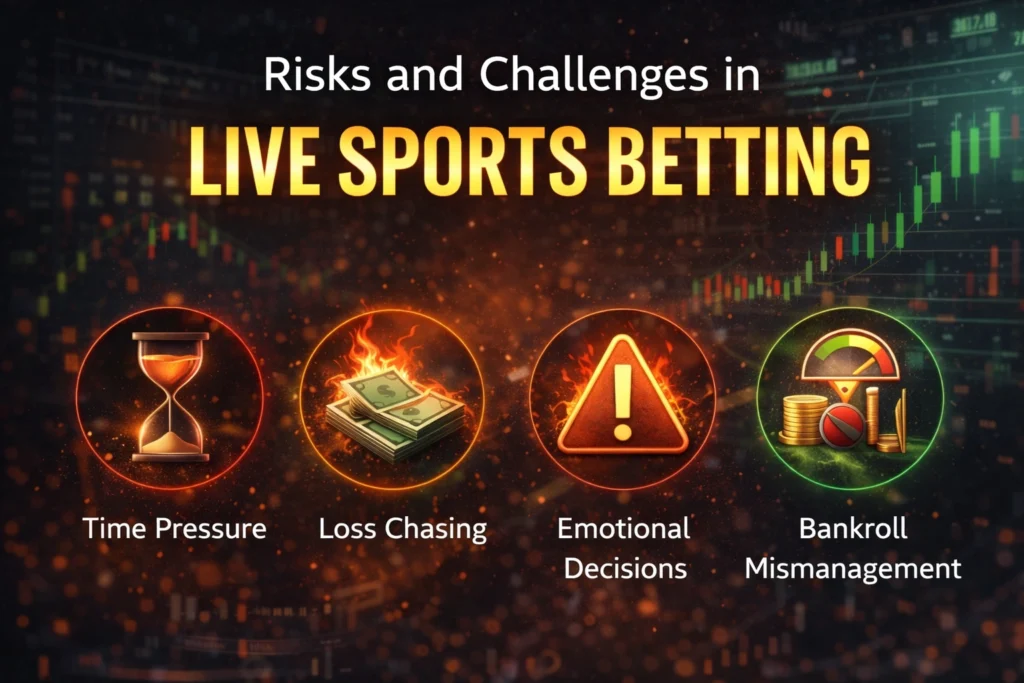
While live sports betting offers excitement and flexibility, it also comes with significant risks. The fast-paced environment, constantly shifting odds, and emotional intensity can create challenges that bettors must understand before participating. Recognizing these risks is essential for making informed and responsible decisions.
1. Rapid Decision-Making Pressure
Live sports betting requires quick thinking. Odds may change within seconds, leaving little time for deep analysis. This time pressure increases the likelihood of impulsive decisions.
Without a structured plan, bettors may place wagers based on instinct rather than logic. Over time, repeated rushed decisions can negatively impact results.
2. Higher Volatility
Live markets are highly volatile because they respond instantly to game events. A single goal, turnover, or injury can dramatically shift odds.
While volatility creates opportunity, it also increases uncertainty. Sudden changes can turn a seemingly strong position into a losing one within minutes.
3. Information Delays
Most bettors watch games through television or streaming services, which often have slight delays compared to official data feeds used by sportsbooks.
This delay means sportsbooks may adjust odds before the bettor sees the event occur. In very fast situations, such as a tennis serve or a quick basketball possession, this lag can reduce advantage.
4. Increased Betting Frequency
Because live sports betting allows continuous wagering throughout a match, bettors may place far more bets than they originally intended.
More bets mean:
- Greater exposure to risk
- Higher emotional involvement
- Faster bankroll fluctuations
Without strict limits, frequency alone can create financial strain.
5. Market Efficiency
Modern sportsbooks use advanced algorithms and real-time analytics. These systems process large amounts of data instantly, making markets highly efficient.
Finding consistent value requires more than guessing momentum — it demands deep understanding and disciplined timing. Competing against automated pricing models is challenging.
6. Addiction Risk
The fast feedback loop of live sports betting — placing a bet and seeing the result quickly — can increase the potential for compulsive behavior.
The continuous availability of markets may encourage repetitive betting patterns. Responsible gambling practices are essential to avoid harmful habits.
Responsible Live Sports Betting Practices
To manage risks effectively, bettors should:
- Set strict bankroll limits
- Define session time boundaries
- Avoid chasing losses
- Take regular breaks
- Track performance and results
- View betting as entertainment, not guaranteed income
Live sports betting can enhance the enjoyment of sports when approached responsibly. However, without discipline and awareness of potential challenges, it can quickly become overwhelming.
Understanding both the opportunities and the risks creates a balanced perspective. In live sports betting, success is not only about identifying good bets — it is about managing risk intelligently over the long term.
The Future of Live Sports Betting
Live sports betting continues to evolve rapidly as technology, data analytics, and digital platforms advance. What began as a simple in-play option has transformed into a highly interactive and data-driven experience. The future promises even greater speed, personalization, and immersion for bettors around the world.
1. Faster Data and Real-Time Integration
As internet speeds and streaming technology improve, the gap between live action and betting markets will continue to shrink. Ultra-low latency streams and real-time data feeds will allow odds to update even more accurately and quickly.
This increased precision will make markets more efficient, but it will also create smoother user experiences for bettors. The faster the data, the more synchronized the betting experience becomes with the actual event.
2. Growth of Micro-Betting
Micro-betting is expected to expand significantly in the coming years. These short-term wagers focus on immediate outcomes, such as:
- The result of the next play
- The outcome of the next serve
- Whether the next possession results in points
Micro-markets offer instant results, keeping engagement high. As predictive models become more advanced, sportsbooks will likely introduce even more granular betting options.
3. Artificial Intelligence and Predictive Modeling
Artificial intelligence plays an increasing role in live sports betting. Advanced algorithms analyze:
- Player tracking data
- Real-time performance metrics
- Historical trends
- Situational probabilities
In the future, AI may provide highly personalized betting suggestions based on user behavior and preferences. While this could improve convenience, it also highlights the importance of self-control and independent decision-making.
4. Enhanced User Experience
Mobile applications continue to dominate live sports betting. Future platforms are likely to include:
- Interactive live statistics dashboards
- Visual match trackers
- Customizable alerts
- Personalized betting recommendations
User interfaces will become more intuitive, allowing bettors to access detailed data without leaving the live screen.
5. Virtual and Augmented Reality Integration
Emerging technologies such as virtual reality (VR) and augmented reality (AR) could reshape how live sports betting feels. Bettors may one day watch games in immersive virtual stadium environments while placing wagers in real time.
This blend of entertainment and wagering could create a highly engaging digital sports ecosystem.
6. Increased Regulation and Responsible Gambling Measures
As live sports betting grows globally, regulatory frameworks are also expanding. Governments and regulatory bodies are placing greater emphasis on responsible gambling measures, including:
- Spending limits
- Self-exclusion tools
- Transparency requirements
- Consumer protection policies
Stronger regulation aims to balance innovation with player protection.
Final Thoughts on Live Sports Betting
Live sports betting has fundamentally changed the way people interact with sports. It combines real-time analysis, rapid decision-making, and strategic thinking in a highly dynamic environment.
While the opportunities are exciting, the key to long-term sustainability lies in discipline, preparation, and responsible behavior. Technology will continue to enhance the experience, but the fundamentals remain the same:
- Understand the sport.
- Manage your bankroll.
- Control your emotions.
- Think strategically rather than impulsively.
Live sports betting is not simply about predicting outcomes — it is about reacting intelligently to unfolding events. Those who approach it with patience and structure are far more likely to enjoy the experience while minimizing unnecessary risk.
Frequently Asked Questions About Live Sports Betting
To better understand live sports betting, it helps to address some of the most common questions beginners and experienced bettors often ask. These answers provide clarity on how live betting works and what to expect.
1. Is Live Sports Betting Different from Pre-Match Betting?
Yes, live sports betting differs significantly from traditional pre-match wagering. In pre-match betting, you place a bet before the event starts, and the odds remain fixed once your wager is confirmed.
In live sports betting, odds continuously change based on what is happening during the game. This dynamic pricing allows bettors to react to real-time developments rather than relying solely on predictions made before kickoff.
2. Are Live Betting Odds Better Than Pre-Match Odds?
Not necessarily. Live odds reflect updated probabilities based on game progress. Sometimes they may offer better value if the market overreacts to a short-term event. Other times, they may be less favorable due to higher bookmaker margins in fast-moving markets.
The key is not whether live odds are always better, but whether they present value based on informed analysis.
3. Why Are Live Bets Sometimes Suspended?
Live markets may temporarily suspend during critical moments, such as:
- Penalty kicks
- Free throws
- VAR reviews
- Major injuries
- Potential scoring plays
Suspensions protect fairness and prevent bettors from exploiting information delays between official data feeds and televised broadcasts.
4. What Is Cash-Out in Live Sports Betting?
Cash-out allows bettors to settle their bet before the event ends. The amount offered depends on the current odds and game situation.
If your team is leading, you may cash out for a profit. If the situation turns unfavorable, you might cash out to reduce potential losses. While useful, cash-out decisions should be strategic rather than emotional.
5. Can You Make Consistent Profit with Live Sports Betting?
Consistency in live sports betting requires:
- Deep knowledge of the sport
- Strong bankroll management
- Emotional discipline
- Long-term strategy
There is no guaranteed profit method. Markets are competitive and data-driven. Success depends on patience, smart decision-making, and responsible wagering habits.
6. Is Live Sports Betting Riskier?
Live sports betting can feel riskier because of its speed and frequency. The ability to place multiple bets during one match increases exposure.
However, risk depends largely on behavior. With strict limits, disciplined strategy, and controlled betting frequency, live sports betting can be managed responsibly.
Conclusion
Live sports betting has transformed the modern sports experience by turning passive viewers into active participants. The ability to react in real time, adjust strategies based on momentum, and capitalize on shifting odds creates a dynamic and engaging environment. However, the same speed and flexibility that make live sports betting exciting also demand discipline, preparation, and emotional control.
Success in live sports betting is not about constant action — it is about smart timing. Understanding the sport, managing your bankroll carefully, and avoiding impulsive decisions are the foundations of long-term sustainability. When approached responsibly, live betting can enhance the thrill of every match without creating unnecessary financial pressure.
If you are looking to explore more insights, strategies, and responsible betting information, you can also check our detailed resources at officialrockybook. For broader gaming and sports-related updates, visit kheloyaarone for additional perspectives and platform information.
Ultimately, live sports betting should remain a form of entertainment supported by structured strategy. Stay informed, stay disciplined, and always prioritize responsible participation while enjoying the real-time excitement that live sports betting offers.